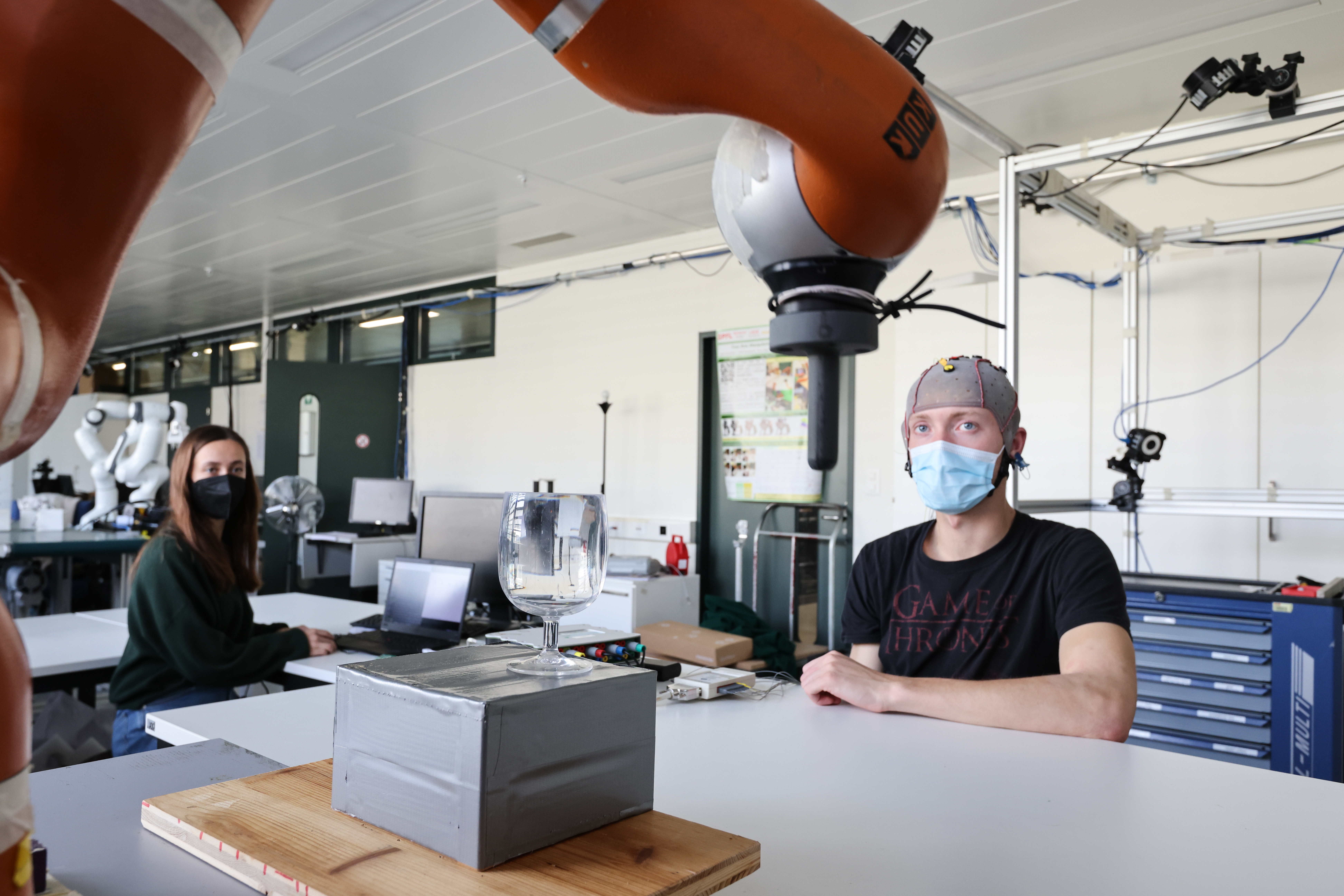
Two EPFL research groups teamed up to develop a machine-learning program that can be connected to a human brain and used to command a robot. The program adjusts the robot’s movements based on electrical signals from the brain. The hope is that with this invention, tetraplegic patients will be able to carry out more day-to-day activities on their own.

Media properties
- Themes
- Research and Tech Transfer , STI, Robotics, Microengineering, Research and Tech Transfer
- Copyright
- EPFL - Alain Herzog
- Licence
- CC0 Licence
- Shooting date
- Dec. 21, 2021
- Album
- Mind-controlled robots now one step closer
Share on